
Global Folk Music Pathways™
Designing Transformative Music Learning Across Cultures
An interdisciplinary curriculum framework that helps elementary students explore world cultures through music, creativity, storytelling, movement, and technology.
Role
Learning Experience Designer
Curriculum Developer
Music Educator
Community Partnership Lead
Status
Piloted in Elementary Classrooms
Continuously Evolving
Ongoing Research & Development
Project Overview
Global Folk Music Pathway™ helps PreK–5 students experience, create, perform, and understand world music with cultural respect, curiosity, creativity, and global awareness for all
The Challenge
Elementary music programs often introduce global music through isolated songs or celebrations, offering limited opportunities for students to understand cultures in meaningful, interconnected ways.
Schools need learning experiences that combine artistic excellence, cultural understanding, creativity, and student agency while remaining developmentally appropriate.
Research Questions
How can elementary students explore world cultures through authentic musical experiences?
How can music become a bridge for empathy instead of simply teaching repertoire?
How can storytelling, technology, movement, and performance reinforce musical understanding?
How can teachers implement multicultural curriculum without overwhelming preparation time?
How can students become creators instead of consumers?
Research Foundations
Inspired by established approaches in music education, learning sciences, intercultural education, and learning experience design.
Design Principles
The project is guided by a proprietary learning framework developed through years of classroom practice, interdisciplinary research, and iterative design.
Learning Experiences
“Rooted in purpose, shaped by vision, driven by results.”
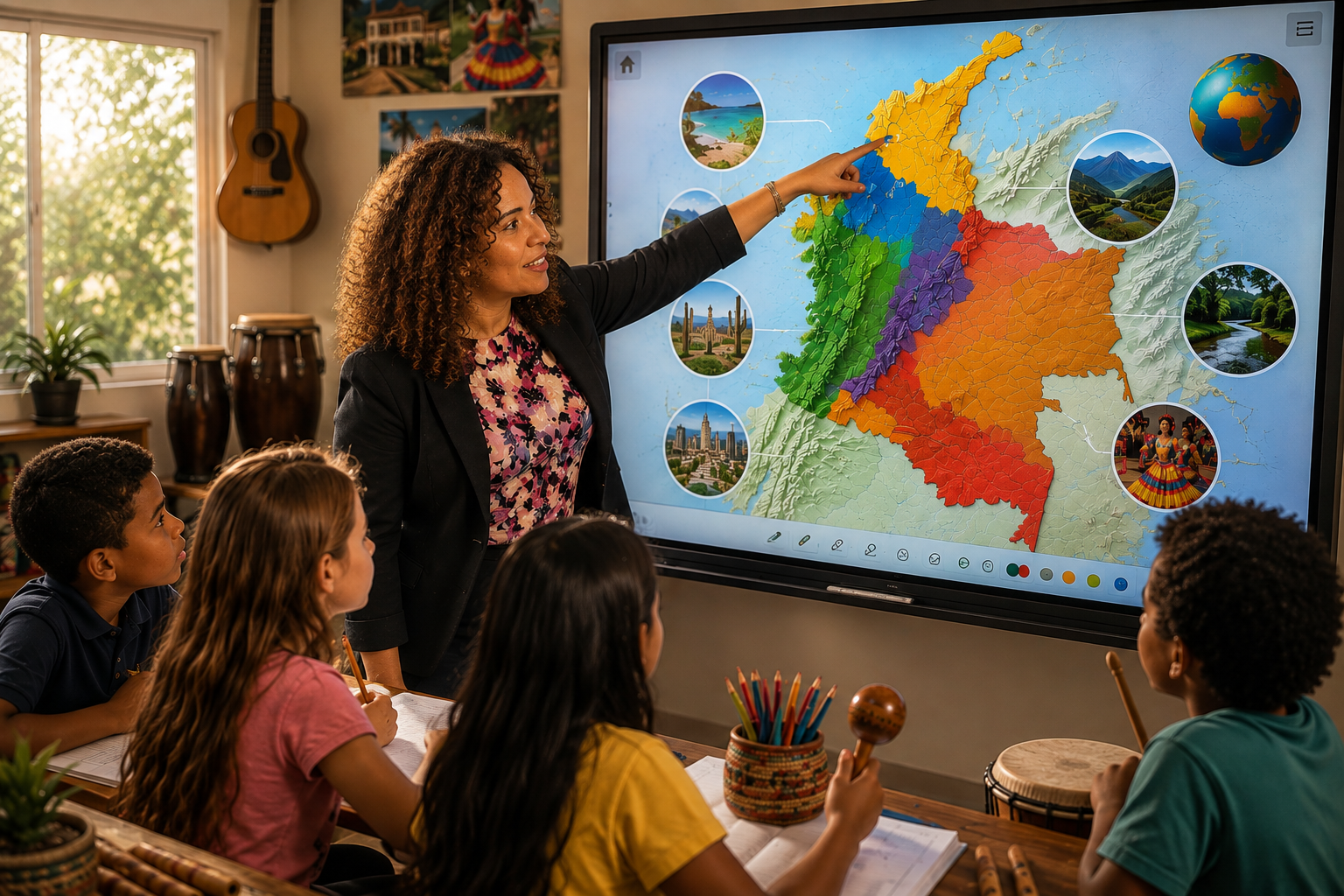
Students explore the stories, geography, people, and Afro-Colombian cultural traditions behind every cumbia before bringing its music to life. Through inquiry, creativity, performance, and reflection, they discover that every song carries the voice of a community, preserving cultural heritage while fostering empathy, curiosity, and a deeper understanding of our shared humanity.
Pilot Implementation
Classroom Implementation
Twenty-five third-grade students explored Colombian folk music through singing, cultural inquiry, and creative learning experiences. Their work culminated in a school performance during the Hispanic Heritage Assembly, demonstrating both musical growth and cultural understanding.
Community Partnership
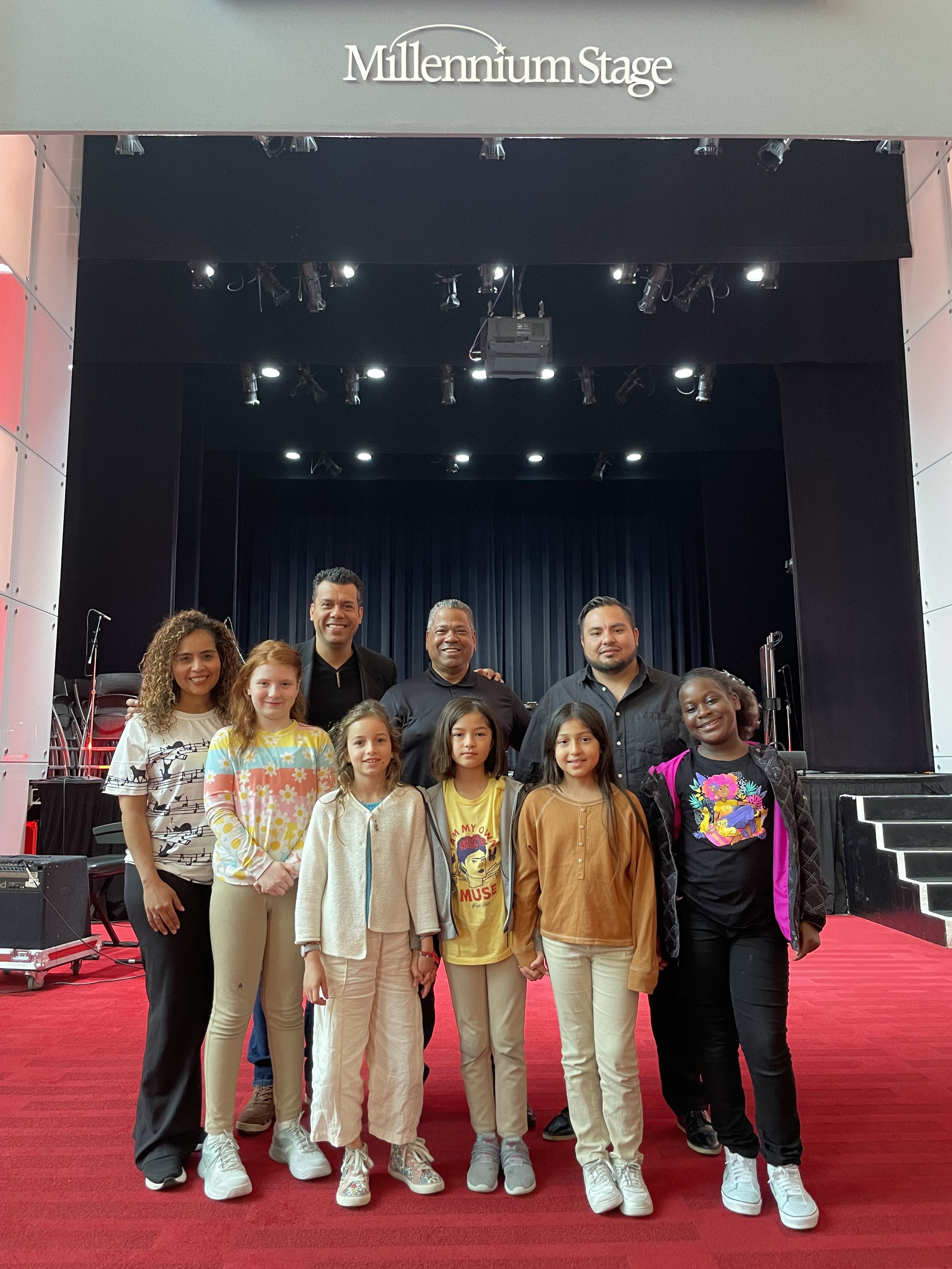
Six highly committed student volunteers continued beyond the classroom, participating in additional rehearsals alongside professional Latin musicians. Their dedication led to a collaborative performance representing the school at the John F. Kennedy Center for the Performing Arts, providing an authentic intercultural learning experience.
Professional Collaboration
Final rehearsals with the professional ensemble gave students opportunities to experience artistic mentorship, ensemble collaboration, and real-world performance practices while strengthening connections between schools and the local arts community.
These pilot experiences continue to inform the iterative development of the curriculum, helping refine learning experiences, community partnerships, and student outcomes.
Increased student confidence in music-making
Stronger cultural curiosity
Creative composition and improvisation
Cross-disciplinary learning
Collaborative performances
Family and community engagement
Outcomes
Looking Ahead
Digital ecosystem
Teacher toolkit
WEAVE integration
Community partnerships
International collaboration